
Date and time: April 23, 2026, 2:00 PM CDT
Speaker: Can Cui — Bosch Center for Artificial Intelligence, Sunnyvale, CA
Archive: Flier | Recording
Register today
About the talk
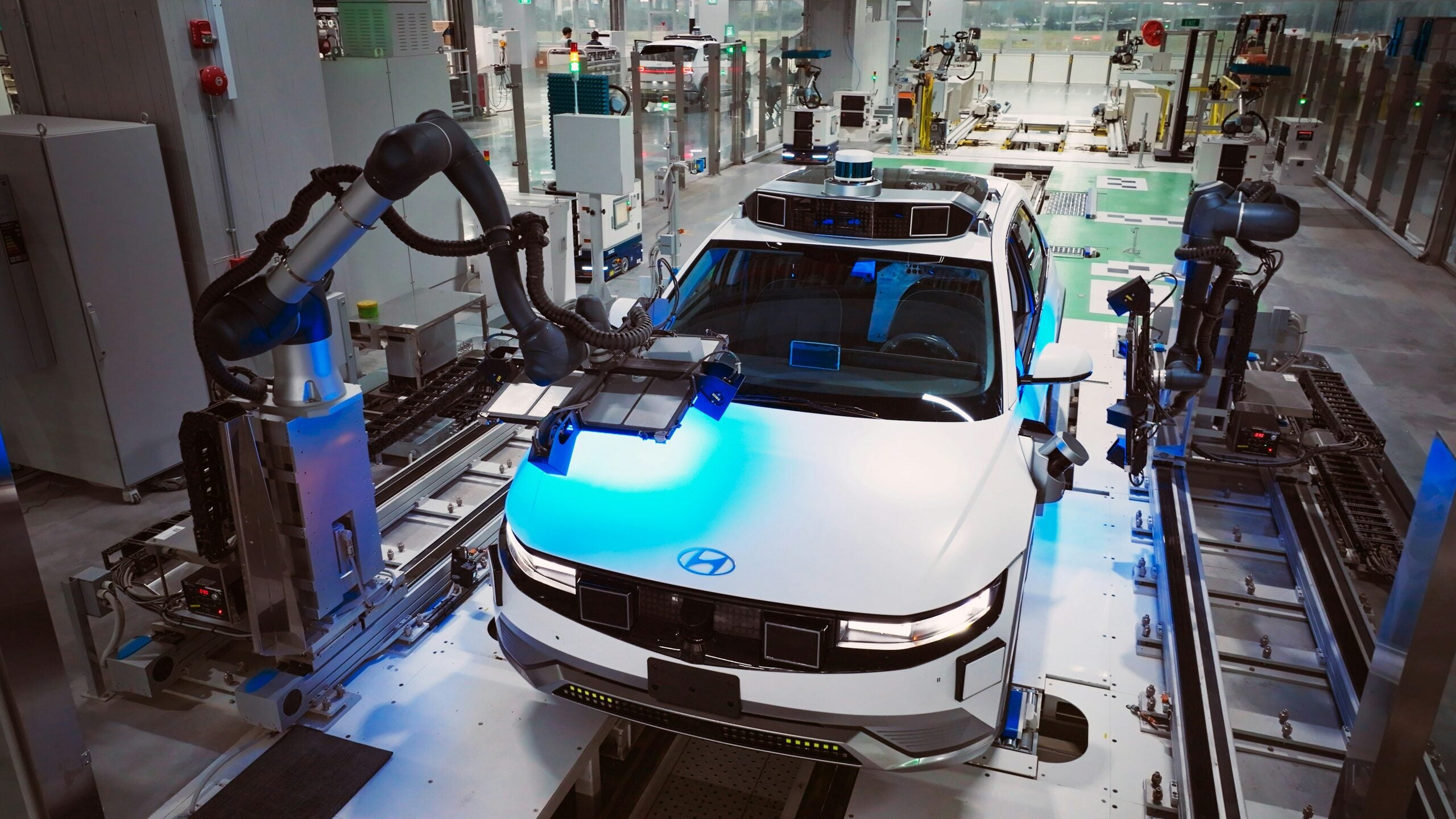
Autonomous driving technology is experiencing a paradigm shift. While traditional systems have achieved impressive performance in perception and control, they remain “automated tools” that are black boxes that optimize for geometric safety but fail to understand human intent, communicate reasoning, or adapt to personal preferences. This seminar introduces a Human-Autonomy Teaming (HAT) framework designed to bridge this gap. By leveraging the emergent capabilities of Foundation Models (Large Language Models and Vision-Language Models), we propose a system where the vehicle functions not as a passive tool, but as an active, collaborative teammate. The presentation will detail the theoretical architecture of the HAT framework, which consists of three core pillars: (1) The Autonomy Foundation: A safety-critical layer responsible for reliable motion generation and environmental interactions; (2) The Human Foundation: A semantic layer that translates raw sensor data into human-aligned concepts, enabling the system to understand intent, preferences, and social context; (3) The Core Teaming Engine: The cognitive center (powered by LLMs/VLMs) that aligns the Autonomy and Human foundations, facilitating bidirectional communication, reasoning, and closed-loop adaptation. We will discuss how this framework is operationalized from simulation to real-world deployment, demonstrating how foundation models enable vehicles to communicate naturally, reason about complex scenarios, and adapt their control strategies to individual users in real-time.
Speaker
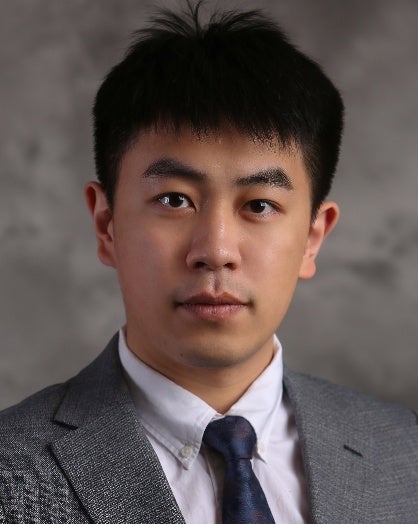
Can Cui is currently a research scientist at the Bosch Center for Artificial Intelligence in Sunnyvale, CA. He received his Ph.D. in Autonomous Driving from Purdue University in 2025, under the supervision of Dr. Ziran Wang, and his M.S. in Electrical and Computer Engineering from the University of Michigan in 2022. Dr. Cui’s research interests lie at the intersection of foundation models and autonomous systems, with a specific focus on Large Language Models (LLMs), Vision Language Models (VLMs), and human-autonomy teaming. He has authored papers in top-tier journals and conferences, including IEEE Transactions on Intelligent Vehicles, CVPR, EMNLP, and ICCV. He is the recipient of the 2025 Purdue CEE Best Dissertation Award and the 2025 TRB Vehicle-Highway Automation Committee Best Paper Award. Dr. Cui actively serves the academic community as a Guest Editor for the SAE International Journal of Connected and Automated Vehicles and has organized multiple workshops on foundation models for autonomous driving at CVPR, ICCV, and WACV.