2026 National Mobility Summit:
Advancing the Movement of People and Goods

Express Interest to Attend

Hotel and registration information will be posted soon.

Intro Preview

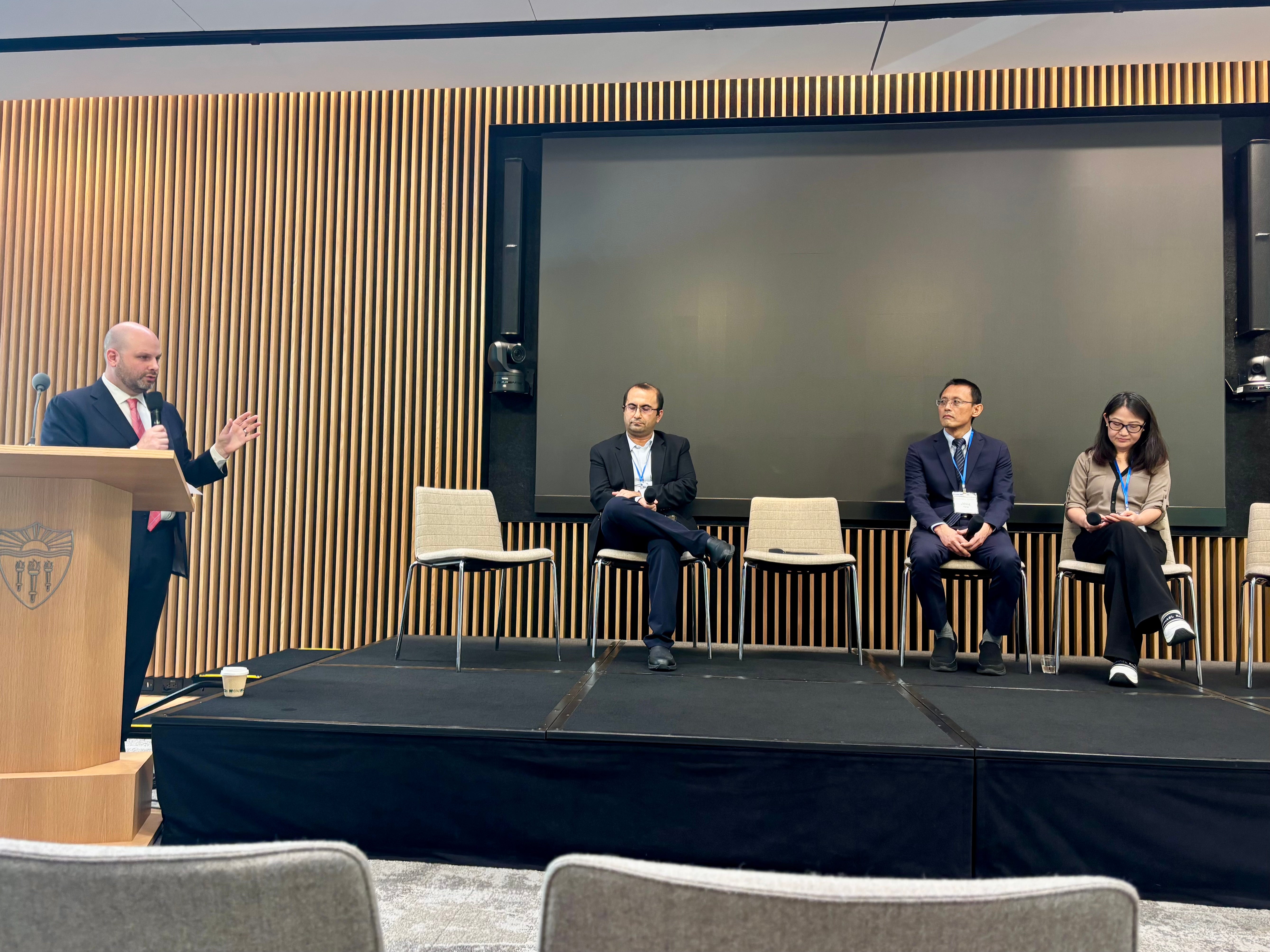
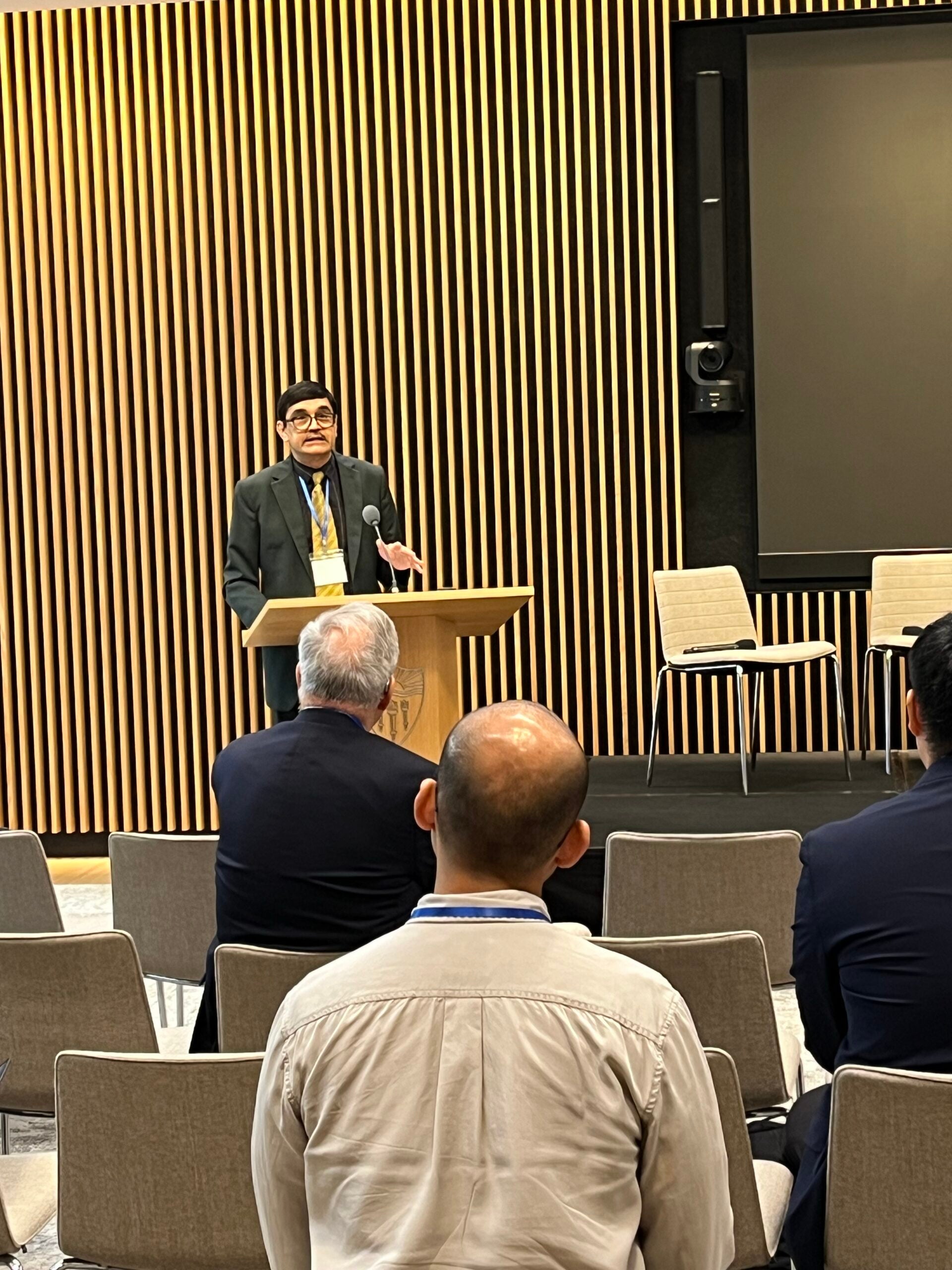
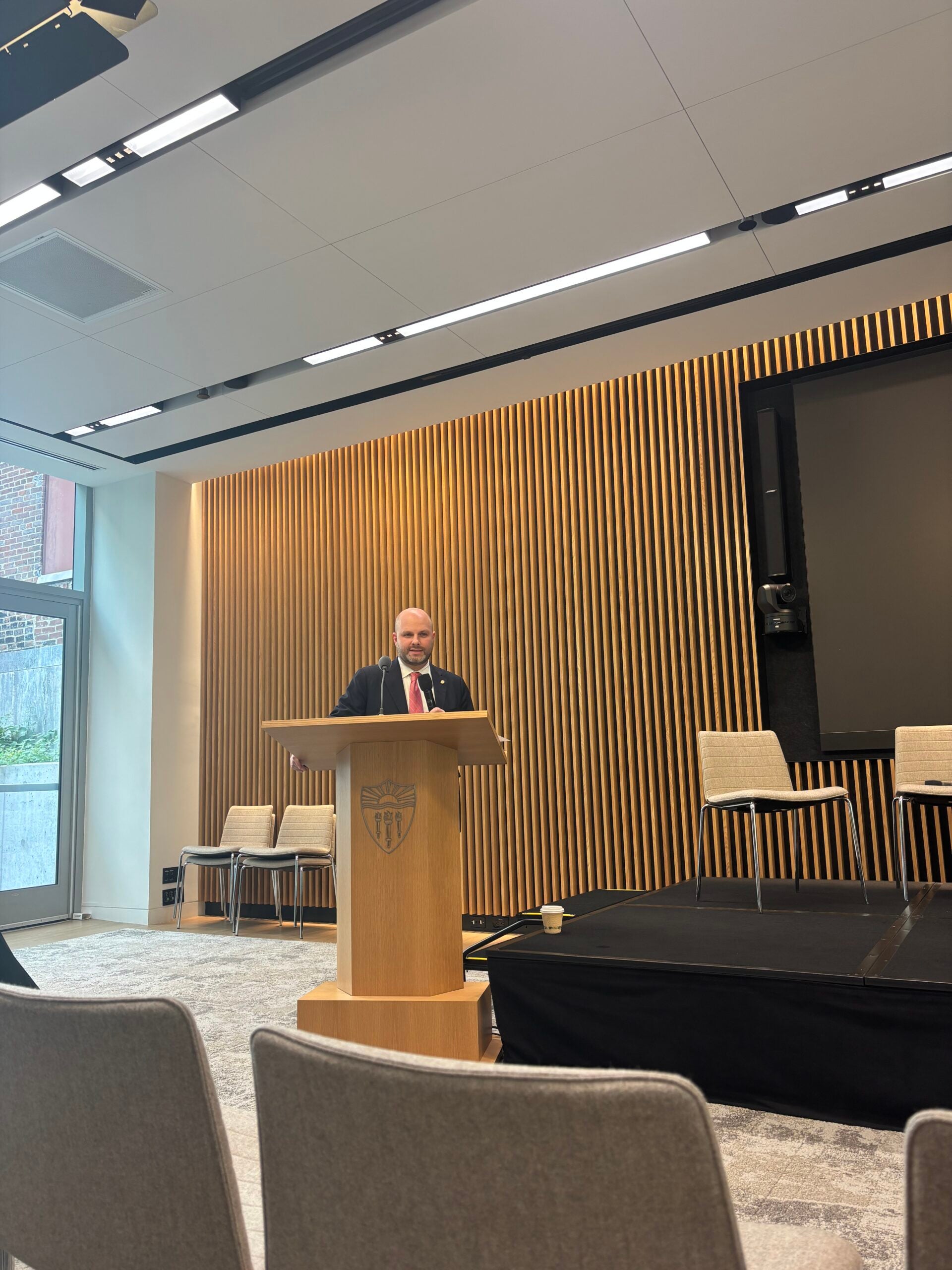
The 2026 National Mobility Summit will convene leaders from the U.S. Department of Transportation, state and local government agencies, congressional offices, industry partners, and University Transportation Centers (UTCs) within the USDOT strategic area of Improving the Mobility of People and Goods to advance a shared national objective: strengthening the mobility of people and goods as a foundation for economic competitiveness, supply chain resilience, and quality of life across the United States.

Organized by the National Center for Understanding Future Travel Behavior and Demand (TBD Center), in collaboration with the National Center for Sustainable Transportation and eight Regional and Tier-1 UTCs, the Summit is designed not merely as a research showcase, but as a coordinated national platform for advancing mobility system performance.

The program will highlight research innovations, deployment strategies, and technology-driven solutions that enhance performance across highway, transit, freight, rail, maritime, and emerging transportation systems – while explicitly linking innovation to measurable system performance.

The United States faces structural shifts in travel demand, rapid growth in freight activity, evolving logistics models, digital transformation of infrastructure systems, and persistent rural connectivity challenges. In this environment, mobility innovation must be performance-driven, deployment-ready, and nationally coordinated.

The Summit is organized by TBD National Center, in close collaboration with the UTCs advancing mobility nationwide, including: NCST, PacTrans, PSR UTC, CR2C2, CMMM, FERSC, MarTREC, R-SEAT, and SMARTER Center.

For any inquiries, please contact Dr. Chandra Bhat at bhat@mail.utexas.edu.

Summit Focus Areas
Travel Demand Forecasting Understanding and forecasting changing travel demand in the context of telework, e-commerce, automation, and demographic change.
Rural & Regional Connectivity Strengthening rural and regional connectivity to ensure equitable access and economic opportunity.
Freight & Supply Chain Improving freight, port, and urban logistics operations to enhance supply chain reliability and global competitiveness.
Data & AI Integration Leveraging data fusion, artificial intelligence, and digital infrastructure to modernize decision-making and performance management.
Multimodal Performance Advancing multimodal system performance, resilience, and reliability across interconnected networks.
Draft Agenda
As of March 3, 2026  |  Additional speakers to be announced
8:30 AM
Doors Open & Check-In
9:00 AM
USDOT Welcome – Establishing the National Stakes
Why this conversation matters now
A senior USDOT representative opens by framing mobility as foundational to economic competitiveness, supply chain resilience, rural access, and global leadership.
Speaker
To Be Announced
9:05 AM
Welcome & Summit Framing
What this Summit is designed to accomplish
This framing positions the Summit not as a research showcase, but as a national coordination platform focused on deployment, performance measurement, and cross-sector alignment.
Speakers
Dr. Chandra Bhat — Director, Travel Behavior and Demand (TBD) National Center
Participating UTC Directors
9:20 AM
Keynote – Where the Future of Mobility Is Headed: A Strategic Vision
The keynote will include a forward-looking innovation horizon related to:
Digital infrastructure modernization
AI and data integration
Automation and emerging mobility systems
Research ecosystems supporting deployment
Maintaining U.S. global competitiveness
Keynote Speaker
Seval Oz — Senior Advisor, Office of the Assistant Secretary for Research and Technology, U.S. Department of Transportation
9:50 AM
Break
10:00 AM
Panel 1 – Delivering Results: From Federal to Local, Public to Private
Aligning leadership to strengthen the movement of people and goods
How federal, state, regional/local, and industry leaders can align investment, policy, and performance frameworks to strengthen the mobility of people and goods in an era of rapid technological change and fiscal scrutiny.
Framed around an emphasis on performance-driven infrastructure delivery, system reliability, and freight competitiveness – and consistent with USDOT’s focus on supply chain resilience, innovation deployment, and multimodal integration – this panel will explore how leadership at all levels of government can translate research, data, and emerging technologies into measurable national mobility gains.
Key themes will include:
Aligning federal program goals with state-, regional-, and local-level delivery realities
Performance-based investment strategies under constrained fiscal conditions
Strengthening freight corridors and supply chain resilience
Furthering public–private coordination
Advancing digital infrastructure and data governance
Accelerating deployment of UTC-developed innovations
Balancing mobility performance, safety, environmental stewardship, and economic competitiveness
Moderator
To Be Announced
Panelists
Marc Williams — Executive Director, Texas Department of Transportation
Sarah J. Jepson — Chief Planning Officer, Southern California Association of Governments
Additional panelists to be announced
11:00 AM
Panel 2 – Technology, Travel Behavior, and the Built/Digital Environment
How we modernize decision-making tools to match a changing mobility landscape
This session deepens the conversation by examining how behavioral shifts, telework, e-commerce, AI, digital infrastructure, and integrated data systems are reshaping long-term demand patterns, system performance expectations, and infrastructure investment decisions.
Panelists will examine the structural changes in travel behavior resulting from telework, hybrid work, e-commerce growth, automated and connected vehicle deployment, shared mobility services, and pricing strategies. The discussion will focus on how agencies can move beyond static forecasting models toward dynamic, data-integrated, behaviorally grounded planning frameworks.
Key themes will include:
Integrating probe data, freight data, transit data, and traditional travel surveys into unified decision platforms
AI-enabled trip forecasting and system performance modeling
Measuring long-term impacts of telework and digital substitution on congestion, emissions, and infrastructure finance
Ensuring environmental sustainability while maintaining economic competitiveness
Supporting USDOT priorities related to data-driven decision-making, system reliability, and innovation deployment
The panel will highlight how UTC-developed tools can support state DOTs, MPOs, and USDOT in improving forecasting accuracy, capital planning, and performance management.
Moderator
To Be Announced
Panelists
Dr. Cynthia Chen — Professor, Civil & Environmental Engineering, University of Washington
Dr. Celeste Chavis — Associate Professor, Transportation & Urban Infrastructure Studies, Morgan State University
Dr. Wei Cheng — Associate Professor and Chair, Computer Science and Systems, University of Washington, Tacoma
Dr. Peng Hao — Associate Research Engineer, Center for Environmental Research & Technology, University of California, Riverside
11:45 AM
Lunch
12:30 PM
Fireside Chat – From Innovation to Implementation: Delivering Multimodal Mobility Performance
How federal programs operationalize innovation into measurable outcomes
This strategic conversation will focus on bridging innovation and operations in areas such as freight corridor programs, port and supply chain resilience initiatives, rural connectivity funding, and performance-based planning requirements, and translating research into deployable policy tools.
Speaker
To Be Announced
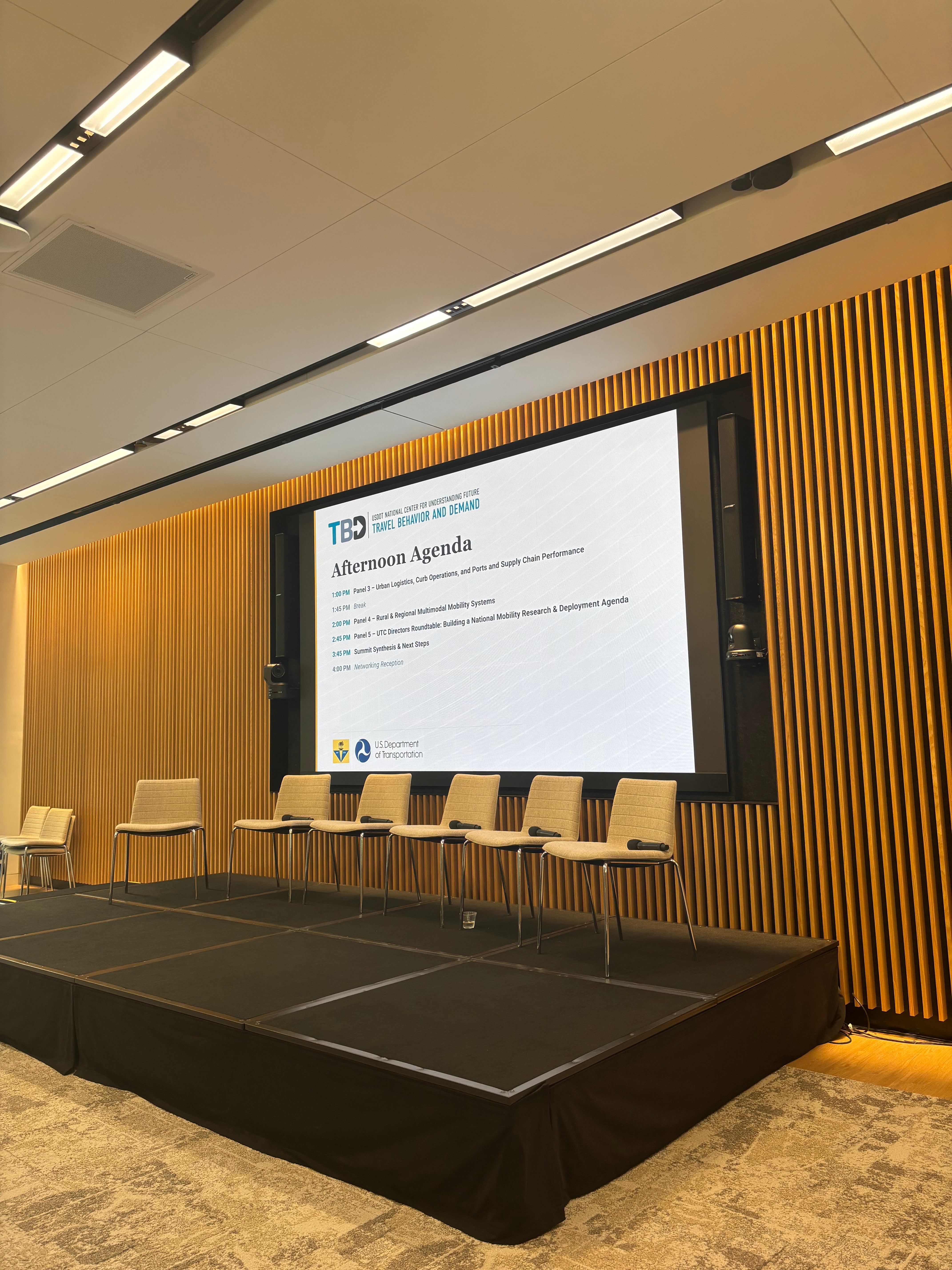
1:00 PM
Panel 3 – Urban Logistics, Curb Operations, and Ports and Supply Chain Performance
How we strengthen national economic competitiveness through supply chain system efficiency
This session will connect directly to federal freight priorities discussed in the fireside chat, examining how freight, port, and urban logistics systems can be modernized to improve reliability, reduce congestion, and strengthen national supply chain resilience.
Building on federal priorities surrounding supply chain performance and freight corridor investment, panelists will address operational bottlenecks in last-mile delivery, port access, and intermodal coordination. The discussion will connect urban curb management challenges with national freight strategy objectives.
Key themes will include:
Managing last-mile delivery and curb access in dense urban environments
Micro-consolidation hubs and off-hour delivery programs
Freight data integration and reliability performance metrics
Port connectivity, maritime resilience, and landside congestion mitigation
Automated trucking readiness and freight corridor modernization
Strengthening domestic supply chain security and global competitiveness
The session will highlight how UTC research supports USDOT’s goals of improving freight fluidity, enhancing port performance, reducing system vulnerabilities, and ensuring that infrastructure investments yield measurable improvements in reliability and throughput.
Moderator
Dr. Elise Miller-Hooks — Bill & Eleanor Hazel Endowed Chair in Infrastructure Engineering, George Mason University
Panelists
Dr. Tom O’Brien — Associate Dean, College of Professional and Continuing Education, California State University, Long Beach
Vince Mantero — Director, Center for Ports and Waterways, Texas A&M Transportation Institute
Dr. Salvador Hernandez — Associate Professor of Civil Engineering, Oregon State University
1:45 PM
Break
2:00 PM
Panel 4 – Rural & Regional Multimodal Mobility Systems
Ensuring mobility innovation serves the entire nation, not just major metros
This session will reinforce congressional and federal emphasis on rural investment, and identify strategies to strengthen connectivity, safety, and multimodal access across rural, regional, and underserved communities – ensuring that mobility innovation benefits the entire nation.
Panelists will examine the unique challenges facing low-density regions, including limited transit access, freight bottlenecks, long-distance travel needs, and constrained infrastructure resources.
The discussion will emphasize scalable and technology-enabled solutions that improve both passenger and goods movement.
Key themes will include:
Enhancing multimodal connectivity in rural corridors
On-demand transit and micromobility coordination
First/last-mile solutions in low-density settings
Integrating roadway, air, and maritime services for regional access
Corridor-level performance optimization and safety improvements
Technology deployment in rural and tribal communities
In alignment with congressional and USDOT emphasis on rural connectivity, economic development, and equitable infrastructure investment, this panel will demonstrate how UTC research is advancing practical deployment strategies that improve access to jobs, healthcare, education, and markets while strengthening freight movement across regional supply chains.
Moderator
To Be Announced
Panelists
Dr. Eren E. Ozguven — Associate Professor & RIDER Center Director, FAMU-FSU College of Engineering
Dr. Jidong Yang — Associate Professor, College of Engineering, University of Georgia
Dr. Pan Lu — Associate Professor, Transportation and Supply Chain, North Dakota State University
2:45 PM
Panel 5 – UTC Directors Roundtable: Building a National Mobility Research & Deployment Agenda
Turning dialogue into a coordinated national roadmap
The session will synthesize insights from the leadership panel and technical discussions into a focused implementation roadmap designed to support:
Group 1: Building a nationally integrated, data-enabled mobility performance architecture (including AI-enabled system performance management, data governance and digital infrastructure integration, forecasting modernization, and integrated multimodal performance measurement). Directors of TBD, NCST, PacTrans, SMARTER
Group 2: Designing for resilience in freight, logistics & supply chain pathways (including freight and supply chain reliability, port and intermodal performance, urban logistics, corridor modernization). Directors of FERSC, MarTREC, and PSR
Group 3: Enhancing connectivity and multimodal integration in rural and regional networks (including first/last-mile access, deployment in underserved communities, and workforce development in regional systems). Directors of CR2C2, R-SEAT, CMMM
The Roundtable will culminate in the articulation of three coordinated national mobility initiatives aligned with federal authorization priorities and state implementation needs. Each initiative will include defined near-term collaborative actions and pilot deployment partnerships, with integration mechanisms across all three initiatives to ensure national coherence and cross-sector coordination.
UTC Directors
Dr. Chandra Bhat — Director, Travel Behavior and Demand (TBD) National Center, University of Texas at Austin
Dr. Alissa Kendall — Professor, University of California, Davis (representing NCST Director)
Dr. Yinhai Wang — Director, Pacific Northwest Transportation Consortium (PacTrans), University of Washington
Dr. Marlon Boarnet — Director, Pacific Southwest Region University Transportation Center (PSR UTC), University of Southern California
Dr. Kevin P. Heaslip II — Director, Center for Freight Transportation for Efficient and Resilient Supply Chain (FERSC), University of Tennessee Knoxville
Dr. Cinzia Cirillo — Director, Center for Multi-Modal Mobility in Urban, Rural, and Tribal Areas (CMMM), University of Maryland
Dr. Ali Karimoddini — Director, Center for Regional and Rural Connected Communities (CR2C2), North Carolina A&T State University
Dr. Heather Nachtmann — Director, Maritime Transportation Research and Education Center (MarTREC), University of Arkansas
Dr. Ren Moses — Director, Rural Safe Efficient and Advanced Transportation (R-SEAT) Center, Florida A&M University
Dr. Mansoureh Jeihani — Director, Safety and Mobility Advancements Regional Transportation and Economics Research (SMARTER) Center, Morgan State University
3:45 PM
Summit Synthesis & Next Steps
What happens next
The Summit will conclude with a commitment to sustained federal–state–academic coordination to ensure that mobility innovation translates into measurable national performance gains, including a concise articulation of:
A cross-UTC collaboration structure for coordinated research in the “safe mobility of people and goods” thematic area
A federal engagement strategy to ensure alignment with USDOT program offices
A state DOT partnership model to accelerate deployment of validated innovations
A data integration initiative to support multimodal performance measurement
The objective is to move from dialogue to alignment – establishing a shared national platform that connects UTC innovation directly to federal priorities and state implementation needs.
Speaker
Dr. Chandra Bhat — Director, Travel Behavior and Demand (TBD) National Center
4:00 PM
Networking Reception
Participating University Transportation Centers
  • TBD National Center – National Center for Understanding Future Travel Behavior and Demand
  • NCST – National Center for Sustainable Transportation
  • PacTrans – Pacific Northwest Transportation Consortium
  • PSR UTC – Pacific Southwest Region University Transportation Center
  • CR2C2 – Center for Regional and Rural Connected Communities
  • CMMM – Center for Multi-Modal Mobility in Urban, Rural and Tribal Areas
  • FERSC – Center for Freight Transportation for Efficient and Resilient Supply Chain
  • MarTREC – Maritime Transportation Research and Education Center
  • R-SEAT – Rural Safe, Efficient, and Advanced Transportation
  • SMARTER Center – Safety and Mobility Advancements Regional Transportation and Economics Research Center
TBD National Center NCST PacTrans PSR UTC CR2C2 CMMM FERSC MarTREC R-SEAT SMARTER Center

Supported By

USDOT University Transportation Centers Program

USDOT University Transportation Centers Program

This summit is made possible through the U.S. Department of Transportation’s University Transportation Centers program, which has advanced transportation research, education, and workforce development since 1987.

Scroll to Top